 Nederlands
 English
 Deutsch
 Français
 Español






The anatomy of an explosive double leg

Of all takedowns in MMA and grappling, the explosive double leg remains one of the most effective and feared techniques. Not only because it is fast and powerful, but because it is extremely difficult to defend when executed well. A strong double leg comes from technique, positioning, explosiveness and preparation.
Whether you’re a BJJ practitioner looking to strengthen your takedown game or an MMA fighter aiming to perfect your transition from standing to ground control, everything starts with understanding the fundamentals of this takedown and training with the right gear, such as safe mats and equipment that protects you during shoot drills and takedown entries.
What exactly is a double-leg takedown?
A double-leg takedown is a classic attack in which you grab both legs of your opponent and bring them to the ground with an explosive movement. The technique revolves around placing your weight under your opponent’s center of gravity, followed by a powerful drive usually forward or at an angle.
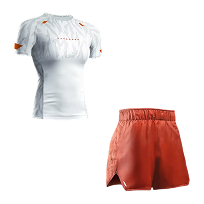
The power of a good double leg is found not only in your legs but also in your timing and balance. For clean entries and driving steps, a lightweight grappling short is essential so you can move explosively without restriction.
The three phases of an explosive double leg
An effective double leg consists of three phases:
The entry – stepping in at the right moment, usually with a level change and explosive footwork.
The connection – taking control of the hips or knee pits.
The finish – using your drive to move your opponent and bring them down, often at a 45-degree angle.
Throughout these phases, you move fast, low and controlled. To keep your form clean, a compression rashguard is important so nothing catches or restricts you during entries or close-contact moments.
Level change: The key to success
Every explosive double leg begins with a good level change lowering your center of gravity to get under your opponent. It must be fast, controlled and stable in posture. Your back stays straight, your knees bend and your head stays aligned with your spine.
To practise this movement repeatedly without restriction, you need training clothing that moves with your body and doesn’t ride up or get in the way.
Timing and distance: The invisible weapons
A double leg only works when performed at the right moment and from the right distance. Too early, and you crash into the opponent’s defense. Too late, and you risk a guillotine or getting sprawled. Timing is often more important than strength.
Train reaction time and setups with agility tools and dummies that help you learn distance awareness and explosiveness. Combine this with rashguards that stay dry so sweat doesn’t affect your grip or speed.
The importance of head and hip control
During the connection phase, it’s crucial to secure the right control points: knees, thighs or hips. At the same time, your head must be placed on the correct side usually the outside to maximize your drive line.
These details require a lot of drill work. Use functional fightwear that doesn’t shift during close contact so your head positioning remains technically clean and you’re not distracted by clothing issues.
Explosion and drive: When power does matter
Once you make contact, power becomes relevant. An explosive double leg requires a strong drive from your legs and hips. You push your opponent off balance and toward the ground, often at an angle to reduce resistance. Here, explosiveness is decisive but only when properly timed.
Train this with strength and explosiveness tools such as bands or resistance trainers, and make sure your shorts and tops stay secure during takedowns so you can focus fully on technique and power.
Common mistakes in double legs
Even experienced fighters often make these mistakes:
– Shooting too upright, leading to a sprawl.
– Stepping in too deep, losing momentum.
– Failing to secure a follow-up grip, losing control.
Correct these mistakes with partner drills and tools, and use compression fightwear that supports full movement under resistance.
Double leg in MMA: More than just a takedown
In MMA, a double leg is more than a way to bring someone to the ground. It opens opportunities for ground-and-pound, cage control or winning a round on the judges’ scorecards. The double leg itself becomes a threat that opens other weapons such as uppercuts or guillotine counters from your opponent.
Make sure your MMA gear supports this style. Wear fight shorts with an elastic waistband and split cut that won’t ride up or shift when combining takedowns with strikes.
Want to develop an explosive, technical and reliable double leg?
Invest in your technique and in gear that supports you during drills, entries and finishes. Explore grappling shorts, rashguards, training tools and fightwear for MMA and BJJ at Fightstyle.nl — specially selected for fighters who combine precision with power.


Leave a comment